

Is Lancome Phasing Out Absolue Bx Makeup
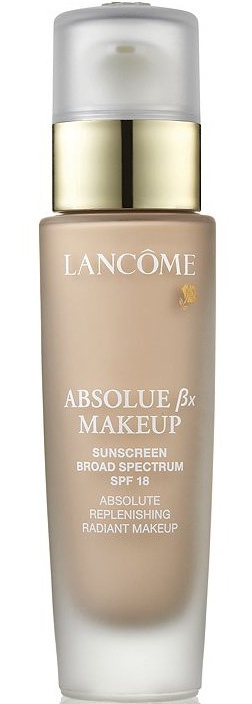
Absolue Bx Liquid Makeup Foundation
Radiant and replenishing with SPF xviii
Uploaded by: lulug on
Ingredients overview
Inactive Ingredients: Water, Isohexadecane, Dipentaerythrityl Hexacaprylate/Hexacaprate, Isodecyl Neopentanoate, Glycerin, PEG-30 Dipolyhydroxystearate, Methyl Methacrylate Crosspolymer, Dicaprylyl Carbonate, Paraffin, Glycyrrhiza Glabra (Licorice) Root Extract, Padina Pavonica Extract, Aluminum Hydroxide, Adenosine, Magnesium Sulfate, Disodium EDTA, Disodium Stearoyl Glutamate, Propylene Carbonate, Propylene Glycol, Hydroxypropyl Tetrahydropyrantriol, Dioscorea Villosa (Wild Yam) Root Extract, Disteardimonium Hectorite, Hexyldecanol, Tocopheryl Acetate, Methylparaben, Propylparaben, Diazolidinyl Urea, Fragrance, Linalool, Limonene, Citronellol
Highlights
Key Ingredients
Other Ingredients
Skim through
| Ingredient name | what-it-does | irr., com. | ID-Rating |
|---|---|---|---|
| Octinoxate (6.9930%) | sunscreen | 0, 0 | |
| Titanium Dioxide (i.7169%) | sunscreen, colorant | goodie | |
| H2o | solvent | ||
| Isohexadecane | emollient, solvent | ||
| Dipentaerythrityl Hexacaprylate/Hexacaprate | emollient, emulsifying, viscosity controlling | ||
| Isodecyl Neopentanoate | emollient | ||
| Glycerin | skin-identical ingredient, moisturizer/humectant | 0, 0 | superstar |
| PEG-30 Dipolyhydroxystearate | emulsifying | ||
| Methyl Methacrylate Crosspolymer | |||
| Dicaprylyl Carbonate | emollient | ||
| Paraffin | viscosity controlling, perfuming | ||
| Glycyrrhiza Glabra (Licorice) Root Extract | soothing, skin brightening | superstar | |
| Padina Pavonica Extract | |||
| Aluminum Hydroxide | emollient, moisturizer/humectant, viscosity decision-making | ||
| Adenosine | cell-communicating ingredient | goodie | |
| Magnesium Sulfate | viscosity decision-making | ||
| Disodium EDTA | chelating | ||
| Disodium Stearoyl Glutamate | surfactant/cleansing | ||
| Propylene Carbonate | solvent, viscosity decision-making | ||
| Propylene Glycol | moisturizer/humectant, solvent, viscosity controlling | 0, 0 | |
| Hydroxypropyl Tetrahydropyrantriol | cell-communicating ingredient | goodie | |
| Dioscorea Villosa (Wild Yam) Root Excerpt | |||
| Disteardimonium Hectorite | viscosity decision-making | ||
| Hexyldecanol | emollient | ||
| Tocopheryl Acetate | antioxidant | 0, 0 | |
| Methylparaben | preservative | 0, 0 | |
| Propylparaben | preservative, perfuming | 0, 0 | |
| Diazolidinyl Urea | preservative | icky | |
| Fragrance | perfuming | icky | |
| Linalool | perfuming | icky | |
| Limonene | perfuming, solvent | icky | |
| Citronellol | perfuming | icky | |
| Titanium Dioxide | colorant | 0, 0 | |
| Fe Oxides | colorant | 0, 0 |
Lancôme Absolue Bx Liquid Makeup Foundation
Ingredients explainedAlso-called: Octinoxate, Octyl Methoxycinnamate;Ethylhexyl Methoxycinnamate | What-it-does: sunscreen | Irritancy: 0 | Comedogenicity: 0
A clear, oil-soluble, "cosmetically-elegant" liquid that is the most ordinarily usedchemic sunscreen. Information technology absorbs UVB radiation (at wavelengths: 280-320 nm) with a top protection at 310nm.
It but protects against UVB and not UVA rays (the 320-400 nm range) – so always cull products that incorporate other sunscreens too. It isnot very stable either, when exposed to sunlight, information technology kind of breaks downward and loses its effectiveness (not instantly, but over fourth dimension - it loses ten% of its SPF protection power within 35 mins). To make it more stable it tin can be - and should be - combined with other sunscreen agents to give stable and broad-spectrum protection (the new generation sunscreen agent, Tinosorb Southward is a peculiarly adept ane for that).
Regarding safety, there are as well some concerns around Octinoxate. In vitro (fabricated in the lab not on real people) and creature studies have shown that it may produce hormonal (estrogen-like) effects.Do non panic, the studies were not conducted under real life conditions on real human people, so it is probably over-cautious to avoid Octinoxate altogether. Nevertheless, if you are pregnant or a pocket-sized child (under 2 yrs. old), choose a physical (zinc oxide/titanium dioxide) or new-generation Tinosorb based sunscreen, merely to be on the super-safe side. :)
Overall, Ethylhexyl Methoxycinnamate is an onetime-school chemical sunscreen agent. There are plenty of better options for sunday protection today, but it is considered "safety as used" (and sunscreens are pretty well regulated) and it is available worldwide (tin be used upwardly to 10% in the EU and up to 7.v% in the Us).
Titanium Dioxide is ane of the 2 members of the elite sunscreen group called physical sunscreens (or inorganic sunscreens if you're a science geek and want to exist precise).
Traditionally, UV-filters are categorized as either chemical or physical. The big divergence is supposed to be that chemical agents absorb UV-low-cal while physical agents reflect it like a bunch of mini umbrellas on top of the peel. While this categorization is easy and logical it turns out it'due south not true. A recent, 2016 report shows that inorganic sunscreens piece of work mostly by absorption, simply like chemic filters, and only a picayune bit past reflection (they practise reflect the calorie-free in the visible spectrum, merely mostly absorb in the UV spectrum).
Anyway, information technology doesn't matter if it reflects or absorbs, Titanium Dioxide is a pretty crawly sunscreen agent for two main reasons: it gives a dainty broad spectrum coverage and it's highly stable. Its protection is very good between 290 - 350 nm (UVB and UVA II range), and less proficient at 350-400 nm (UVA I) range. Regular sized Titanium Dioxide also has a not bad prophylactic profile, information technology's non-irritating and is pretty much free from any health concerns (like estrogenic effect worries with some chemical filters).
The disadvantage of Titanium Dioxide is that it's not cosmetically elegant, meaning it's a white, "unspreadable" mess. Sunscreens containingTitanium Dioxide are ofttimes hard to spread on the skin and they leave a disturbing whitish tint. The cosmetic manufacture is, of course, really trying to solve this problem and the all-time solution so far is using nanoparticles. The itsy-bitsy Nano-sized particles improve both spreadability and reduce the whitish tint a lot, only unfortunately, information technology also introduces new health concerns.
The primary business concern with nanoparticles is that they are so tiny that they are absorbed into the skin more than we want them (ideally sunscreen should remain on the surface of the skin). Once absorbed they might form unwanted complexes with proteins and they might promote the germination of evil costless radicals. Simply exercise not panic, these are concerns under investigation. A 2009 review article most the condom of nanoparticles summarizes this, "to date, in-vivo and in-vitro studies have not demonstrated percutaneous penetration of nanosized particles in titanium dioxide and zinc oxide sunscreens". The English translation is, and so far information technology looks similar sunscreens with nanoparticles exercise stay on the surface of the skin where they should be.
All in all, Titanium Dioxide is a famous sunscreen agent and for good reason, it gives broad spectrum UV protection (all-time at UVB and UVA 2), information technology'southward highly stable, and it has a good safety profile. Information technology's definitely one of the best UV-filter agents we have today, peculiarly in the United states where new-generation Tinosorb filters are not (withal) canonical.
Too-called: Aqua | What-information technology-does: solvent
Expert onetime water, aka H2O. The near common skincare ingredient of all. You tin unremarkably observe it correct in the very offset spot of the ingredient list, significant it's the biggest thing out of all the stuff that makes upwards the product.
It'southward mainly a solvent for ingredients that do not like to dissolve in oils but rather in water.
One time inside the skin, it hydrates, but not from the outside - putting pure water on the pare (hi long baths!) is drying.
1 more thing: the h2o used in cosmetics is purified and deionized (information technology ways that about all of the mineral ions within it is removed). Like this, the products can stay more stable over time.
A light, velvety, unique peel feel liquid that is a good solvent and too makes the skin experience overnice and shine (aka emollient). It'southward often used in makeup products mixed with silicones to give shine and sideslip to the product. It'southward likewise not bad for cleansing dirt and oil from the skin also equally for taking off make-up.
A medium viscosity, odorless oily liquid that leaves an excellent afterfeel, with the pare feeling soft and conditioned. The feel is described by the manufacturer as slightly oily but not tacky or sticky.
Dipentaerythrityl Hexacaprylate/Hexacaprate often comes to the formula mixed with two other emollients, Tridecyl Stearate, and Tridecyl Trimellitate, every bit the trio can match the artful and textural properties of ruined-past-natural-marketers mineral oil.
A low molecular weight dry, silkyemollient ester that gives a light and non-greasy feel to the formulas. It's great at reducing the oily or heavy feeling caused by certain ingredients such as sunscreen agents or pigments. Information technology likewise gives improved emolliency, spreadability and a smooth, elegant feel on the skin.
- A natural moisturizer that'due south too in our skin
- A super common, safety, effective and cheap molecule used for more than 50 years
- Not only a elementary moisturizer but knows much more: keeps the pare lipids between our skin cells in a healthy (liquid crystal) state, protects against irritation, helps to restore barrier
- Effective from as low as 3% with even more benefits at college concentrations up to 20-40% (around 10% is a skilful usability-effectiveness sweet spot)
- Loftier-glycerin moisturizers are awesome for treating severely dry out skin
Read all the geeky details about Glycerin here >>
PEG-30 Dipolyhydroxystearate is a popular water-in-oil (w/o) emulsifier, meaning that it helps the oily and watery parts of the formula to mix in a style where h2o droplets are dispersed in the continuous oil phase and non the other way round.
Compared to the more unremarkably used oil-in-water (o/w) emulsions, w/o emulsions tend to be heavier and less cosmetically elegant, but PEG-xxx Dipolyhydroxystearate is claimed to help with this and enables a lite and elegant skin feel. It also has a molecular construction that creates big anchors both in the water and in the oil phase making the resulting emulsion not only cosmetically elegant just also very stable.
Porous spherical microbeads (tiny little balls) that can requite an elegant silky texture to the products. They are besides used to scatter light to reduce the expect of fine lines on the skin, as well as to absorb excess oil and requite a matt finish.
A clear, colorless, nearly odorless oil that spreads nicely and easily and gives a velvet dry out pare feel. It is adept friends with sunscreen agents and helps to solubilize them. Also, it makes sunscreens feel lighter and spread easier.
 Nosotros don't have clarification for this ingredient yet.
Also-called: Licorice Root;Glycyrrhiza Glabra Root Extract | What-information technology-does: soothing, pare brightening
Y'all might know licorice every bit a sweet treat from your childhood, just it's really a legume that grows around the Mediterranean Sea, the Heart E, key and southern Russia. It'due south sweetness and yellowish and non only used for licorice all sorts merely it's as well a skincare superstar thanks to two magic properties:
Nr. 1 magic property is that it has skin-lightening or to say it some other style depigmenting properties. The nigh active office is called glabridin. The topical application (meaning when you put it on your confront) of 0.5% glabridin was shown to inhibit UVB caused pigmentation of guinea pigs. Another study even suggested that licorice is more effective than the gilded standard skin-lightening agent hydroquinone. All in all, licorice is considered to be one of the safest peel lightening agents with the fewest side effects.
There is just i take hold of regarding glabridin and licorice: the amount of glabridin in commercial licorice extracts can vary a lot. We accept seen extracts with but 4% glabridin besides as 40% glabridin. The latter one is a very-very expensive ingredient, so if y'all are after the depigmenting properties attempt to choose a product that boasts its high-quality licorice extract.
Nr. 2 magic belongings is that licorice is a potent anti-inflammatory. Glabridin has also some soothing backdrop only the principal active anti-inflammatory component is glycyrrhizin. It'south used to treat several skin diseases that are connected to inflammation including atopic dermatitis, rosacea or eczema.
Oh, and one more thing: glabridin seems to be likewise an antioxidant, which is simply one more than reason to be happy virtually licorice root extract on an ingredient list.
Lesser line: Licorice is a great skincare ingredient with significant depigmenting, anti-inflammatory and even some antioxidant properties. Be happy if it'south on the ingredient listing. :)
We don't accept description for this ingredient yet.
Officially, CosIng (the official EU ingredient database) lists Aluminum Hydroxide 's functions equally opacifying (making the production white and non-transparent), as well as emollient and pare protectant.
However, with a footling fleck of excavation, information technology turns out Aluminum Hyroxide oft moonlights as a protective blanket for UV filter superstar Titanium Dioxide. Specifically, it protects our skin from the harmful effects of nasty Reactive Oxygen Species (free radicals derived from oxygen such as Superoxide and Hydrogen Peroxide) generated when Titanium Dioxide is exposed to UV lite. Btw, chlorine in swimming pool h2o depletes this protective coating, and so one more reason to reapply your sunscreen after a dip in the pool on holiday.
Other than that, Aluminum Hydroxide also ofttimes shows up in composite pigment technologies where information technology is used the other fashion around (every bit the base of operations material and not as the coating material) and helps to reach college color coverage with less paint.
Adenosine is an of import little compound in our trunk that has a vital jail cell-signalling office. Research on smearing information technology on our face is also promising and shows so far a couple of things:
- It can assist with wound healing
- It'south a expert anti-inflammatory agent
- It might even help with skin's own collagen product and amend skin firmness and elasticity
- It helps with barrier repair and protection
- It might exist even useful for the pilus helping with pilus thickness and hair growth
A helper ingredient that is used as a bulking and viscosity controlling amanuensis. It is also an emulsion stabilizer in h2o-in-oil emulsions, where water droplets are dispersed in the continuous oil phase and not the other mode circular.
It can also exist used as a estrus generating agent in water-less formulas equally information technology has an instant heat-generating chemical reaction with water.
Super common piddling helper ingredient thathelps products to remain nice and stable for a longer fourth dimension. It does so by neutralizing the metal ions in the formula (that usually get into there from water) that would otherwise cause some not and then nice changes.
It is typically used in tiny amounts, around 0.i% or less.
We don't have description for this ingredient notwithstanding.
Nosotros don't have description for this ingredient yet.
- It's a helper ingredient that improves the freeze-thaw stability of products
- It'due south also a solvent, humectant and to some extent a penetration enhancer
- It has a bad reputation among natural cosmetics advocates but cosmetic scientists and toxicology experts do not agree (read more in the geeky details section)
Read all the geeky details nigh Propylene Glycol here >>
A "green chemical" developed past L'oreal in 2006. It comes from the sugar molecule, xylose that can be establish in beechwood.
According to L'Oreal's claims, Pro-Xylane can boost the production of of import skin-building blocks chosen GAGs (aka glycosaminoglycans, important NMFs) in the extracellular matrix (the goopy stuff between our skin cells) that results in amend hydrated and firmer skin.
We don't take description for this ingredient yet.
An organic derivative of hectorite dirt, Disteardimonium Hectorite is used every bit a viscosity controller - it thickens upwardly formulations to make them less runny.
Information technology's most pop employ in cosmetics is in sunscreens, under the trademarked name Bentone 38 from Elementis. According to the manufacturer info, it is a real multi-tasker, including the ability to prevent pigments settling during storage, stabilizing a formula for longer,creating a lite and polish pare feel and enhancing the water-resistance of sunscreen formulas.
A yellowish oily liquid that works as amedium spreading emollient and is suitable for a wide pH range.
Also-called: Vitamin E Acetate | What-it-does: antioxidant | Irritancy: 0
It'southward the most commonly used version of pure vitamin E in cosmetics. You can read all about the pure course hither. This one is the and then-chosen esterified version.
Co-ordinate to famous dermatologist, Leslie Baumann while tocopheryl acetate is more than stable and has a longer shelf life, it'south also more than poorly absorbed by the skin and may not have the aforementioned awesome photoprotective effects as pure Vit E.
What-information technology-does: preservative | Irritancy: 0 | Comedogenicity: 0
The most common type of feared-by-everyone-more often than not-without-scientific-reason parabens. It's a cheap, constructive and well-tolerated ingredient to make certain the corrective formula does not become wrong likewise soon.
Apart from the general controversy around parabens (we wrote about information technology more than here), in that location is a 2006 in-vitro (made in the lab not on existent people) research nigh methylparaben (MP) showing that when exposed to sunlight, MP treated skin cells suffered more than harm than not-MP treated pare cells. The study was not done with real people on real pare only still - using a practiced sunscreen next to MP containing products is a proficient thought. (Well, in fact using a sunscreen is always a expert idea. :))
A very common blazon of feared-by-everyone-mostly-without-scientific-reason parabens. It's a cheap, effective and well-tolerated ingredient tomake sure the cosmetic formula does not go wrong as well presently.
An antimicrobial preservative that helps your products not to go wrong too quickly. It works especially well against bacteria, specifically gram-negative species, yeast, and mold.
Somewhat controversial, it belongs to an infamous family of formaldehyde-releasers. That is, information technology slowly breaks down to form formaldehyde when it is added to a formula. We have written more about formaldehyde-releasing preservatives and the concerns around them at Dmdm Hydantoin, just do not get besides scared, those are more theories than proven facts.
Equally for Diazolidinyl Urea itself, a written report from 1990 writes that at concentrations upwardly to 0.4%, information technology was a mild cumulative skin irritant, just the CIR (Cosmetic Ingredient Review) reviewed it in 2006 and plant that, in concentrations of <0.five%, information technology is rubber as used, equally the amount of formaldehyde released volition be smaller than the recommended limit (of less than 0.2%).
All in all, it is up to your personal conclusion and skin sensitivity.
As well-called: Fragrance, Parfum;Parfum/Fragrance | What-it-does: perfuming
Exactly what it sounds: dainty smelling stuff put into corrective products so that the end product also smells nice. Fragrance in the US and parfum in the EU is a generic term on the ingredient list that is made up of thirty to 50 chemicals on average (but it can take as much every bit 200 components!).
If you are someone who likes to know what you lot put on your face then fragrance is not your best friend - at that place's no mode to know what'south actually in it.
Also, if your skin is sensitive, fragrance is again not your best friend. It'due south the number one crusade of contact allergy to cosmetics. It's definitely a smart thing to avoid with sensitive peel (and fragrance of any type - natural is merely as allergic equally synthetic, if not worse!).
Linalool is a super mutual fragrance ingredient. Information technology'southward kind of everywhere - both in plants and in cosmetic products. Information technology's part of 200 natural oils including lavender, ylang-ylang, bergamot, jasmine, geranium and it can be constitute in 90-95% of prestige perfumes on the market.
The problem with linalool is, that but like limonene it oxidises on air exposure and becomes allergenic. That's why a product containing linalool that has been opened for several months is more probable to be allergenic than a fresh 1.
A study made in the UK with 483 people tested the allergic reaction to 3% oxidised linalool and ii.3% had positive examination results.
A supermutual and cheap fragrance ingredient. Information technology's in many plants, e.grand. rosemary, eucalyptus, lavender, lemongrass, peppermint and it's the principal component (near fifty-90%) of the peel oil of citrus fruits.
Information technology does odor nice but the problem is that it oxidizes on air exposure and the resulting stuff is not good for the peel. Oxidized limonene tin cause allergic contact dermatitis and counts as a frequent skin sensitizer.
Limonene'south nr1 function is definitely being a fragrance component, just there are several studies showing that information technology's as well a penetration enhancer, mainly for oil-loving components.
All in all, limonene has some pros and cons, simply - especially if your skin is sensitive - the cons probably outweigh the pros.
Citronellol is a very common fragrance ingredient with a nice rose-like olfactory property. In the United kingdom of great britain and northern ireland, it's actually the third most often listed perfume on the ingredient lists.
It can be naturally found in geranium oil (most 30%) or rose oil (nigh 25%).
As with all fragrance ingredients, citronellol can also cause allergic contact dermatitis and should be avoided if you lot accept perfume allergy. In a 2001 worldwide written report with 178 people with known sensitization to fragrances citronellol tested positive in 5.vi% of the cases.
In that location is no known anti-aging or positive skin benefits of the ingredient. Information technology'south in our products to make it smell squeamish.
Besides-called: Titanium Dioxide/Ci 77891;Ci 77891 | What-it-does: colorant | Irritancy: 0 | Comedogenicity: 0
Ci 77891 is the color lawmaking of titanium dioxide. It's a white pigment with nifty color consistency and dispersibility.
Also-chosen: Ci 77491/77492/77499 | What-it-does: colorant | Irritancy: 0 | Comedogenicity: 0
A bit of a sloppy ingredient name every bit it covers non one only three pigments: red, yellow and black atomic number 26 oxide.
The trio is invaluable for "skin-colored" makeup products (think your foundation and pressed pulverisation) as blending these 3 shades carefully can produce nigh whatsoever shade of natural-looking flesh tones.
You may besides want to have a look at...
Octinoxate - an old-schoolhouse chemical sunscreen that absorbs UVB radiation (wavelengths: 280-320 nm). Not photostable and does not protect against UVA. [more] A physical/inorganic sunscreen with pretty broad spectrum (UVB and UVA II, less good at UVA I) protection and proficient stability. Might get out some whitish tint on the skin, though. [more] Normal (well kind of - it's purified and deionized) h2o. Usually the main solvent in cosmetic products. [more] A calorie-free, velvety, unique skin experience liquid that is a good solvent and likewise makes the peel feel nice and smooth. [more] A medium viscosity, odorless oily liquid that leaves an excellent afterfeel, with the pare feeling soft and conditioned. The feel is described by the manufacturer as slightly oily just non tacky or pasty. Dipentaerythrityl Hexacaprylate/Hexacaprate frequently comes to the formula mixed with ii other emollients, Tridecyl Stearate, and [more] A low molecular weight dry, silky emollient ester that gives a calorie-free and non-greasy experience to the formulas. [more] A existent oldie only a goodie. Great natural moisturizer and peel-identical ingredient that plays an important role in skin hydration and general peel health. [more than] PEG-30 Dipolyhydroxystearate is a popular water-in-oil (w/o) emulsifier, pregnant that it helps the oily and watery parts of the formula to mix in a way where water droplets are dispersed in the continuous oil phase and not the other style round. Compared to the more commonly used oil-in-water (o/due west) emulsions, due west/o emulsions tend to exist heavier and less cosmetically elegant, just [more than] Porous spherical microbeads that can give an elegant silky texture to the products. They are also used to besprinkle calorie-free to reduce the wait of fine lines on the skin, every bit well as to absorb excess oil and give a matt terminate. A clear, colorless, nigh odorless oil that spreads nicely and easily and gives a velvet dry out peel experience. It is good friends with sunscreen agents and helps to solubilize them. Officially, CosIng (the official Eu ingredient database) lists Aluminum Hydroxide 'south functions as opacifying (making the product white and non-transparent), also every bit emollient and skin protectant. Nonetheless, with a little bit of digging, information technology turns out Aluminum Hyroxide often moonlights every bit a protective coating for UV filter superstar Titanium Dioxide. [more] An important chemical compound in our body that has a vital cell-signalling role. It is wound healing, anti-inflammatory and tin can help with barrier repair. [more than] A helper ingredient that is used equally a bulking and viscosity controlling amanuensis. It is also an emulsion stabilizer in h2o-in-oil emulsions, where h2o droplets are dispersed in the continuous oil stage and not the other way round. It can also be used as a heat generating agent in water-less formulas as it has an instant heat-generating chemical reaction with water. [more] Super common niggling helper ingredient that helps products to remain prissy and stable for a longer time. It does so by neutralizing the metal ions in the formula (that usually get into at that place from water) that would otherwise crusade some not and then prissy changes. [more than] A mutual glycol that improves the freeze-thaw stability of products. It's besides a solvent, humectant and to some extent a penetration enhancer. [more than] Pro-Xylane - a sugar-based "green chemical science" ingredient by L'Oreal. Claimed to heave the production of of import skin-building blocks (GAGs) that results in better hydrated and firmer skin. [more] An organic derivative of hectorite dirt, Disteardimonium Hectorite is used as a viscosity controller - it thickens up formulations to make them less runny.It's most popular apply in cosmetics is in sunscreens, nether the trademarked name Bentone 38 from Elementis. [more] A yellowish oily liquid that works as a medium spreading emollient and is suitable for a wide pH range. [more] A form of vitamin E that works as an antioxidant. Compared to the pure course it's more stable, has longer shelf life, just it'south also more poorly absorbed past the skin. [more] The about common type of feared-by-everyone-by and large-without-scientific-reason parabens. It's a inexpensive, effective and well-tolerated ingredient to make sure the cosmetic formula does not go wrong too soon. Autonomously from the general controversy around parabens (nosotros wrote about it more here), there is a 2006 in-vitro (made in the lab not on real people) research about methylparaben (MP) sho [more] A very mutual type of feared-by-everyone-mostly-without-scientific-reason parabens. It'due south a inexpensive, effective and well-tolerated ingredient to brand certain the corrective formula does not go wrong likewise soon. [more] An antimicrobial preservative that helps your products not to become wrong too quickly. Information technology works especially well against bacteria, specifically gram-negative species, yeast, and mold.Somewhat controversial, information technology belongs to an infamous family unit of formaldehyde-releasers. [more] The generic term for dainty smelling stuff put into cosmetic products so that the cease product besides smells nice. It is made up of 30 to 50 chemicals on average. [more than] A super common fragrance ingredient that tin exist found amongst others in lavander, ylang-ylang, bergamot or jasmine. The downside of information technology is that it oxidises on air exposure and might go allergenic. [more] A super common fragrance ingredient found naturally in many plants including citrus pare oils, rosemary or lavender. It autoxidizes on air exposure and counts as a common skin sensitizer. [more than] A mutual fragrance ingredient with a nice rose-like scent. [more] Titanium dioxide as a colorant. It'southward a white paint with great color consistency and dispersibility. A mix of red, yellow and blackness fe oxide. [more]

Is Lancome Phasing Out Absolue Bx Makeup,
Source: https://incidecoder.com/products/lancome-absolue-bx-liquid-makeup-foundation
Posted by: vanwinklewitildrosen.blogspot.com
0 Response to "Is Lancome Phasing Out Absolue Bx Makeup"
Post a Comment