

How To Express All My Depression And Anxiety Into One Drawing
Introduction
Background
Feet
Nearly 29% of the population volition exist affected by an Advertising somewhere in life (Kessler et al., 2005). It is estimated that currently 264 meg people alive with ADs, and this number increased between 2005 and 2015 with 14,9% (World Health Organization, 2017).
The presence of an Advert is associated with a lower quality of life (QoL) and a negative impact on psychosocial functioning (Mendlowicz and Stein, 2000; Cramer et al., 2005). The nigh common ADs that have an impact on daily life are social anxiety disorder (Sad), generalized anxiety disorder (GAD), and panic disorder (PD) (Anxiety and Depression Association of America [ADAA], 2018). Cognitive behavioral (CBT) and pharmacological therapy (PT) proved to be effective methods for reducing anxiety symptoms (e.thou., Kjernisted and Bleau, 2004; Pohl et al., 2005; Hooke and Folio, 2006; Hofmann and Smits, 2008). However, ADs have a recurrence rate of 54,8% within 4 years, diagnostically instable recurrences included (Scholten et al., 2016) and a substantial portion of individuals does non do good from these standard treatments. Not simply does PT cause side effects, but too between 20 and fifty% of patients have either a contra-indication or don't answer to PT (Lydiard et al., 1996; Davidson et al., 2004; Blanco et al., 2010; Hyman, 2010). Combination of PT with CBT is recommended (Bandelow et al., 2012) but around 50% of individuals with ADs do non benefit from CBT (Nielsen et al., 2018), or prefer not to accept medication,or adopt non-verbal therapy (Uttley et al., 2015). These groups of individuals may benefit from AT.
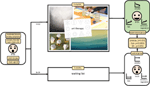
Figure 1. The effectiveness of art therapy in the treatment of anxiety in developed women: a randomized controlled trial.
Fine art Therapy
Art therapy is a non-verbal, experience-oriented therapy that uses the visual arts (e.thousand., painting, drawing, sculpting, clay modeling) and is provided as standalone therapy or in multidisciplinary treatment programs for anxiety. The non-verbal AT arroyo is considered to be suitable for individuals with of anxiety, peculiarly if they have difficulty in cerebral (re)labeling of their feelings, or if they are very focused on cognitive labeling and use rationalizing every bit a psychological coping mechanism (Aureate et al., 2004; Smeijsters, 2008). Moreover, the not-verbal AT approach is considered to be suitable for patients with loftier levels of anxiety, since talking most feet and traumas can evoke fear and associated physical reactions (Posthuma, 2001). Information technology is stated that distance to the feet tin can be provided when creating visual fine art work. To 'distance' oneself from the emotion during the act of creating fine art is believed to improve cognitive regulation of emotions (Smeijsters, 2008). The supposed mechanism is that during the process of creating an art work, one can feel a feeling of being 'in control,' which helps to counterbalance the overwhelming experience of anxiety (Van Gerven, 1996).
The effectiveness of AT on reducing anxiety symptoms in adults has inappreciably been studied in randomized controlled trials (RCTs). There are some indications for effectiveness in dissimilar populations, but most of these studies have considerable methodological flaws leading to high chance of bias and are therefore of low quality (Abbing et al., 2018). There is some show for effectiveness of AT for treating pre-exam feet in undergraduate students (Sandmire et al., 2012) and pre-release anxiety in male person prisoners (Zhan Yu et al., 2016). There are no studies on specific ADs like GAD, Distressing, or PD (Abbing et al., 2018).
Fine art therapy has a multifariousness of subtypes, that are based on various perspectives from psychoanalysis, cognitive-analytic therapies, compassion-focused therapy, zipper-based psychotherapy and client-centered approaches, like mindfulness and mentalization-based treatments (British Association of Art Therapists [BAAT], 2018). I of the AT variants with a customer-centered approach and with similarities to mindfulness-based treatments is AAT.
An expressive approach is mutual in most AT interventions (British Association of Art Therapists [BAAT], 2019), in which the client is guided to express feelings, thoughts and life experiences. This approach is likewise used in AAT, but is combined with an 'inwardly oriented' approach, where the therapist offers specific artistic exercises that are ofttimes structured and aim to provide 'impressions': profound experiences of colour and shape. These are thought to actuate and strengthen the self-regulating ability of the client.
An of import characteristic of anxiety is the exaggerated cognitive appraisement that is associated with the threatening state of affairs: hyper-alert cerebral schemes pb to pathological feet (Beck and Haigh, 2014). The rationale backside AAT is that excessive talking nearly the feet is avoided, to enable patients to deviate from 'the thinking-mode' into a 'feeling-mode': the aim is to support the individual to obtain 'profound connexion to embodied experiences': to go aware of the anxiety feelings and responses in the body and acquire to influence (downregulate) these feelings, past practicing and experiencing. These processes are idea to be supported through various artistic exercises. The effectiveness of AAT and its working mechanisms is, however, inappreciably studied and there is currently no acceptable theoretical background that provides insight in the specific processes that are influenced by the therapy.
Emotion Regulation
Individuals with an Advertisement take more than difficulty in regulating emotions compared to individuals without feet problems (Suveg and Zeman, 2004; Mennin et al., 2005) and are characterized by dysfunctional ER strategies (Cisler et al., 2010; Ziv et al., 2013; Jazaieri et al., 2014; Diefenbach et al., 2016). People with (for example) GAD have developed an increased intensity of emotions, a lack of understanding of emotions, fear for the emotion, and their response to the emotion is inadequate (Mennin et al., 2002, 2004).
Emotion regulation refers to the intrinsic and extrinsic processes that influence the way in which emotions are expressed or suppressed and are given meaning to, conscious as well as unconscious (Gross and Thompson, 2007). Gratz and Roemer (2004) developed a concept of ER, which involves the "awareness and understanding of emotions, acceptance of emotions, ability to command impulsive behaviors and behave in accordance with desired goals when experiencing negative emotions, and the ability to employ situationally advisable ER strategies flexibly" (Gratz and Roemer, 2004, pp. 42–43). ER tin can be improved through training and therapy (Baumeister et al., 2006; Tang and Posner, 2009). Artistic exercises, like for instance expressive writing, can downregulate emotional distress and promote self-insight (eastward.g., Pennebaker and Chung, 2007), Thus, ER is an important cistron in evaluating AT treatment effects. The connection betwixt AT and ER has already been studied and preliminary established in a narrative review on effectiveness studies (Gruber and Oepen, 2018), primarily focusing on changes in mood in healthy subjects. To gain more than insight in the working mechanism(s) of AT on anxiety, it is important to not only investigate the effectiveness of AT on anxiety symptom severity, but also simultaneously explore the office of ER.
Rationale and Objectives
Rationale
Given the need for evidence-based additional treatments for ADs and the lack of methodologically sound effectiveness studies on AT for these indications (Abbing et al., 2018), we designed and executed a written report on the effectiveness of AT in reducing anxiety in adult women.
Objectives
The primary objective was to assess the effectiveness of AT on feet and QoL in women with ADs.
The secondary objective was to explore factors influencing handling consequence.
Materials and Methods
The Consort-NPT statement was used for reporting this trial, which is the extension of the CONSORT for randomized trials assessing non-pharmacologic treatments (NPTs) (Boutron et al., 2017).
Trial Pattern
The effectiveness of ATAT on anxiety symptoms in adult women was studied within a RCT. The trial was pragmatic in the sense that it aimed to study the effectiveness of the intervention equally it is normally practiced in the field. Participants were pre-stratified on comorbid depression and on psychopharmaceuticals use (see department "Randomization Method and Allocation Concealment") and subsequently randomly assigned to an experimental group receiving anthroposophic AT (AT1 group) or a control grouping with participants on a waiting list (WL group), continuing their electric current treatment, if any, for iii months. Both groups were measured at baseline (pre-examination/T0) and afterward the intervention/waiting time at three months (mail-exam/T1). The command group and then received the intervention (AT2 group) and was assessed immediately later intervention at 3 months. The experimental group was also assessed later on 3 months (follow-up/T2) (Figure 2).
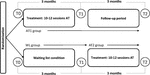
Figure 2. Trial design. AT1 group, art therapy group/experimental grouping; WL group, waiting list grouping/command group; AT2 group, 2nd handling group.
Ethical approval was obtained from the Medical Ethical Committee of the Leiden University Medical Centre, Netherlands (NL36861.018.xi) and the trial was registered in the Dutch Trial Registration (NTR28143).
Participants
Participants were recruited through posters/flyers in the practices of family doctors and by social media. Information about the trial was provided through a website where patients could annals by filling out a screening musical instrument [the Dutch version of the Four Dimension Symptoms Questionnaire (4DKL)] (Terluin, 1996; Terluin et al., 2004). Women with moderate to severe feet symptoms, scoring >7 for anxiety and/or >ten for distress on the 4DKL (Terluin and Duijsens, 2002), were contacted by phone for eligibility assessment. The inclusion was dimensional in nature: subjects were included primarily based on the level of anxiety symptoms.
Included were adult woman (18–65 years), with GAD, Deplorable and/or PD (with or without agoraphobia) (diagnosed by means of the MINI-plus diagnostic interview (Sheehan et al., 1998). Candidates were excluded if they had suffered from psychosis or hallucinations, booze or drug addiction, suicidal take chances and/or brain pathology. Including simply women was a mail service-recruitment decision, since but one male subject fulfilled the inclusion criteria.
Participants signed the informed consent that was approved past the Medical Ethical Committee.
Intervention and Procedure
The study took place at 25 private AT practices spread throughout the Netherlands, in the menses between Jan 2017 and March 2018.
After randomization AT-participants received 10–12 individual AT sessions of 45–threescore min per session during 3 months. Handling was provided only past qualified and registered Dutch anthroposophic art therapists, with more than 5 years' experience in working with adults with anxiety. By but including therapists that fulfill the quality criteria stated by the professional organization, information technology was assured that the intervention deployed in the study was representative for the full general approach in AAT.
The treatment was based on common exercise and consensus within the Dutch professional association of anthroposophic art therapists (NVKT): first to third session involve intake and complimentary fine art work, later which treatment goals are ready and a therapy program is made by the therapist, based on intake and ascertainment of customer and art work (Huber et al., 2003). This plan consists of a variety of artistic exercises that could exist called from a listing with treatment goals and AT activities, based on consensus inside the professional association (Table one). No stock-still treatment protocol was used since anthroposophic AT is a highly individualized treatment. Instead, the exercises on the list could be chosen and adapted to the individual patient, each session taking into account the patients' specific context. The overview listed several exercises within three media: drawing, painting and clay work (Table ane). The contents of the therapy processes (treatment goals and exercises) were documented by the therapists. Afterward, researchers checked if the deployed activities fulfilled the list of treatment goals and exercises. The WL participants were on the WL for three months and received AT 3 months later (Figure 2).

Table one. List of artistic exercises and therapy goals, canonical past the Dutch AAT association.
Measures
The following measures were used for screening, diagnosing and determining anxiety symptom severity, QoL, and ER.
Screening for Psychological Bug
Participants were screened past the 4DKL (Terluin, 1996). This is a questionnaire for adolescents and adults and screens on psychological issues with 50 items, measuring symptoms of distress, low, feet, and somatic symptoms. Anxiety symptoms are measured by 12 items. This instrument is reliable and valid (Egberink et al., 2005).
Diagnostic Interview for Anxiety Disorders and Comorbidity
Psychopathology was assessed using the Dutch version of the rater-administered Mini International Neuropsychiatric Interview Plus (MINI-Plus) (Van Vliet et al., 2000), which is a comprehensive diagnostic semi-structured interview. In the nowadays study, the MINI-Plus was used to assess the type(s) of Advertising and the presence of (comorbid) depression, PTSS and substance abuse (exclusion criterium).
Chief Event: Level and Dimensions of Anxiety
The Dutch version of the Lehrer Woolfolk Anxiety Symptom Questionnaire (LWASQ) (Lehrer and Woolfolk, 1982) was used to measure the anxiety level. The LWASQ is a self-report, generic anxiety instrument with 36 questions which assesses the cognitive (worry and rumination), behavioral (avoidance) and somatic (physical symptoms) aspects of anxiety. The reliability of the LWASQ is sufficient (α = 0.83 to 0.92) and the questionnaire is suitable for the measurement of treatment effects (Scholing and Emmelkamp, 1992).
Secondary Outcomes: Subjective Quality of Life and Emotion Regulation
The Dutch version of the MANchester Short Assessment of QoL (MANSA) (Priebe et al., 1999; Van Nieuwenhuizen et al., 2000) was used to measure out QoL. This musical instrument consists of 12 questions that measure out the satisfaction with, due east.k., life in general, work and friendships. The MANSA is a reliable musical instrument (Janssen-de Ruiter et al., 2015).
To measure the difficulties that patients experience in ER, the Dutch version of the Difficulties in Emotion Regulation Scale (DERS) (Gratz and Roemer, 2004) was used. The questionnaire consists of 36 items in vi domains: (ane) lack of clarity of emotions, (2) lack of sensation of emotions, (3) difficulty in controlling impulses, (4) non-credence of emotions, (five) limited access to ER strategies, and (6) difficulty with goal-oriented activeness (Gratz and Roemer, 2004).
The DERS can be reliably deployed and interpreted in different demographic groups (Ritschel et al., 2015). The construct validity and internal consistency (Cronbach's α > 0.80) is sufficient for all scales (Gratz and Roemer, 2004; Neumann et al., 2010). The test–retest reliability for the total score is good (r = 0.88; subscales 0.56 < r < 0.90).
Procedure of Measurements
All participants completed online assessments of the 4DKL, LWASQ, MANSA, and DERS at 3 time points (Tabular array ii).

Table two. Procedure.
All questionnaires were administered with Qualtrics Survey Software (Qualtrics Software (2005), Provo, UT, United States, version 2017).
Sample Size
Sample size adding was based on a pre–post measurement difference in the primary outcome of 15% (as this was considered a clinically relevant decrease in LWASQ total score), with an blastoff of 0.05 and a power of 0.80. Considering a dropout charge per unit of 15%, the estimated sample size was xxx patients per grouping; a total of 60 participants1.
Randomization Method and Allocation Concealment
Participants were pre-stratified into 4 strata: whether or not using psychotropic drugs, and whether or not having moderate or severe depression symptoms (4DKL: depression > half-dozen), and later on assigned to treatment (AT) or control grouping (WL) by ways of block randomization (blocks of 2) (Figure 3).

Effigy 3. Study menstruation diagram.
Participants received a participation number at enrolment. After enrolment and stratification of participants past AA, a list with the random allocation sequence was generated by EB through computer pick2. AA assigned participants to intervention co-ordinate to the randomization list.
Art therapists and participants could not be blinded.
Statistical Methods
Statistical analyses were conducted using SPSS statistics (version 23.0) (IBM Corp., 2015). All data were checked for normal distribution using the Shapiro–Wilk test, Q–Q plot and histogram.
Evaluation of Baseline Differences
The randomization was evaluated by comparison experimental and control group at baseline. For normal distributed, continuous variables an independent t-exam was used and the variables were presented equally mean ± standard deviation (SD). For categorical variables Pearson's chi-squared test was practical and variables were presented every bit number and/or per centum.
Missing Values
Reasons for missing values were reported. Dropouts were compared to completers using pre-exam measures on age, feet score, depression score and QoL score, past use of contained students t-tests. If no significant differences were found, the missing cases were deleted and per protocol (PP) analyses were performed for all outcomes.
For the intention-to-treat (ITT) analysis missing values on feet score at baseline (T0) and T1 for all participants that were randomized to i of the two groups were imputed based on two theoretical models (White et al., 2011). In the starting time model participants with no measurements at T0 and T1 received anxiety scores that were the hateful of the condition they were allocated to and at T1 the same score was imputed [last observation carried forward (LOCF) procedure], expressing that in that location was no handling issue and participants were comparable to the average participant. Participants with no measurement at T1 received the feet score at T0 (LOCF procedure). The second model was the same, with the only difference that the participants with no measurements at T0 and T1 received anxiety scores that were the highest possible score, expressing the worst-example scenario that these participants were the ones with highest anxiety level.
Hypotheses
The following hypotheses were tested: (1) AT is superior to WL in reducing anxiety symptoms and improving QoL in adult women with ADs; (2) the furnishings of AT remain at three months follow-up; and (3) the effects of AT are confirmed in the WL group that receives AT 3 months subsequently.
Evaluation of Treatment Effects
To examine hypothesis 1, a general linear model repeated measures analysis for variance (RM-ANOVA) was used, using outcomes of LWASQ at pre- and mail service-treatment as levels of the within-subject (WS) factor Exam moment (T0 vs. T1) and Group (AT1 vs. WL) every bit between-subjects (BS) gene. To conclude that the treatment has a positive effect, the Test moment∗Grouping interaction must be meaning and in the correct direction. To exam if reduction of feet was different for the three subscales of the LWASQ, these subscales were added as levels of the WS factor Scale in a 2nd analysis.
Likewise, for the secondary outcomes (MANSA, DERS), RM-ANOVAs were performed. If trend significant interactions were plant, further explorative analyses (paired t-tests) were executed to measure out within-group effects.
A PP analysis was performed for all main and secondary outcome variables. In addition, an ITT analysis was performed for the primary outcome variable 'level of feet.'
A p-value of 0.05 was considered statistically meaning. The effect size partial eta squared () was calculated to assess the magnitude of the effect. An upshot size of 0.01–0.06 is considered a minor outcome, 0.06–0.14 a medium, and >0.14 a large effect in RM analysis (Borenstein, 2009).
For hypothesis ii, a RM-ANOVA with Test moment (T0, T1, T2) as WS gene on the primary and secondary outcomes of the AT1 group was performed, to determine if treatment effects remain for (at least) 3 months and to examination if an upshot (compared to baseline) still exists, using a uncomplicated contrast with T0 equally the reference level (T0 vs. T1, T0 vs. T2).
Hypothesis 3 was tested with paired t-tests on T1–T2 outcomes (pre- vs. post-treatment) of the WL group that received treatment (AT2).
Exploration of Factors Influencing Anxiety Reduction
To explore factors that influence anxiety symptom reduction, correlations were computed between the primary effect variable (pre–postal service treatment difference in feet symptom severity, PP assay) and the pre–post handling difference scores on QoL, distress, somatization and difficulties in ER., Simply the pregnant correlations were farther studied with regression analysis inside the full treatment group (AT1 and AT2 together), to examine if improvements of ER were associated with anxiety symptom reduction. An ANCOVA with pre- and post-treatment scores of feet, and the pre–mail treatment difference score of ER equally covariate was performed equally post hoc assay.
To explore pre-treatment factors that would favorably affect the success of treatment, the same process was followed, but with pre-handling measures of historic period, duration of anxiety, comorbidity (number) and level of education. Regression analyses were conducted within the full treatment group (AT1 and AT2 together), with the primary upshot variable (pre–postal service treatment difference in anxiety symptom severity, PP assay) and the pre-treatment measures that showed a significant correlation with the anxiety deviation score.
Results
Participant Flow
In the period January 2017 until July 2017, 102 persons applied for the trial and were screened for eligibility. A total of 43 patients was excluded for non meeting the inclusion criteria (n = 23) or not willing to participate (n = 19) or for other reasons (n = 1).
In total, 59 participants were included and randomized after stratification. The distribution over the four strata was as follows: no depression and no psychopharmaceuticals (n = 27), no depression and psychopharmaceuticals (northward = 11), depression and no psychopharmaceuticals (north = 14), low and psychopharmaceuticals (due north = 7).
Thirty participants were assigned to the intervention group (AT1) and 29 to the control group (WL). During the study, 12 participants dropped out, six from the AT1 grouping and six from the WL group. Loss-to-follow-up occurred in the AT1 group (northward = ane), besides in the WL grouping (n = three). In full, data of 47 participants were analyzed in the PP analysis: 24 in the AT1 group and 23 in the WL group.
Participants of the AT1 group were followed-up around 3 months after completion of the handling. Participants of the WL group received AT (AT2 grouping) after completion of the 3 months look time. Three participants of AT1 group were lost to follow-upwards and iii participants of the AT2 group did not receive the intervention for several reasons (Figure iii).
Missing Values
Twelve participants (20%) dropped out and 47 participants (80%) completed Stage I of the trial. At that place were no significant differences between dropouts and completers on baseline parameters: age, anxiety score (LWASQ), feet score (4DKL), depression score (4DKL), distress score (4DKL), somatization score (4DKL), and QoL (MANSA) (0.87 < p < 0.29). These results indicate that missings were completely at random and could exist list-wise deleted, without adventure of bias, and further analyses are per-protocol.
Baseline Characteristics
Tabular array 3 gives an overview of the baseline characteristics of participants. The participants did not differ on key variables, including age, diagnosis, employ of medication, occupation, educational activity, familiarity with AM and event variables at baseline.

Tabular array iii. Participants' baseline characteristics.
The analyzed sample of 47 participants had a hateful historic period of 44.four years (SD = xiv.0), moderate to severe feet symptoms: 11.ii (SD = iv.6), a mean duration of anxiety symptoms of 17.vi years (SD = 18.nine) [range: three months – 64 years (lifetime)]. Medication for anxiety was used by fifteen participants and 11 participants received other therapies side by side to AT (psychotherapy, EMDR, and acupuncture).
Multiple anxiety diagnoses applied to all participants (comorbid ADs), with two to five ADs per person. The criteria for the diagnosis GAD were met 25 times, for SAD 21 and for PD 28 times. Ten participants suffered from (comorbid) PTSD, five participants had electric current comorbid depression and 16 participants experienced 1 or more depressive episodes prior to this study.
Features of the Experimental Treatment
In total, 44 participants completed the therapy, and 37 case files were received until September 2018 and analyzed. All cases fulfilled the criteria of an AAT intervention equally described in the study protocol: apply of anthroposophic AT exercises from the predefined list and adaptation of the intervention to the specific context of each individual patient (optional).
Therapy plans consisted of artistic exercises in which the media drawing and dirt modeling were used most oft, respectively in 37 and 34 of the analyzed 37 cases, and painting in 21 cases. Drawing exercises consisted of shape drawing, charcoal cartoon, pastel cartoon, and visualization exercises. The nigh deployed techniques were shape cartoon (drawing of relaxing loops), often provided as homework exercise, the creation of light-nighttime contrasts and conversions (charcoal drawing), drawing from observation and working on atmospheric images in relation to inner feeling (pastel drawing). The expression of the fear, with various materials and techniques, often preceded by a visualization exercise, was also used in most cases. Within the dirt medium, round shapes were most oftentimes used, besides as the modeling of one or more platonic solids. Transformation processes and symbolic exercises were too frequently applied inside the clay medium. Painting exercises were mainly the wet-in-wet technique (aquarelle paint on wet paper) and were mainly used in the showtime sessions as free art work. For examples, encounter Figure 1 (visual abstruse).
Treatment Effects – Primary Outcomes
Per Protocol Analysis
On the master effect feet symptom severity, the interaction effect Test moment∗Group was significant: F(1,45) = 11.49, p = 0.001, with a large upshot size (= 0.20), showing that anxiety was reduced in the AT1 group only not in the WL group (run into Figure four). The three subscales of the LWASQ, added in a second analysis as levels of the WS factor Scale, showed no significant interaction Exam moment∗Group∗Scale (p = 0.71), reflecting that the improvements in anxiety symptom severity agree equally for the somatic, behavioral, and the cognitive area.

Effigy iv. Principal and secondary outcomes at T0, T1, and T2. Means (SE).
The within-grouping outcomes (mean differences, SDs, 95% CIs and p-values) are presented in Supplementary Table 1.
Intention to Care for Analysis
Both ITT analyses for the primary issue (LWASQ) demonstrate the same significant differences betwixt the groups: p = 0.011 with a medium effect size ( = 0.eleven).
Treatment Furnishings – Secondary Outcomes
Quality of Life
The interaction Test moment∗Group was F(ane,45) = 22.94, p < 0.0001 and the effect size was large ( = 0.52), reflecting, that QoL was increased in the AT group merely not in the WL group (Effigy four).
Emotion Regulation
The interaction Examination moment∗Group was trend significant for difficulties in ER (total score): F(1,45) = 3.87, p = 0.055, and was accompanied by a medium effect size ( = 0.08). Post hoc assay confirmed that total ER comeback was meaning in the AT group (p = 0.003) merely not in the WL grouping (p = 0.16). On the subscale level, the only significant interaction Test moment∗Grouping was on the subscale limited access to ER strategies: F(one,45) = half-dozen.0, p = 0.018, = 0.12. This indicates that participants had ameliorate accessibility to ER strategies afterward therapy.
The subscales lack of clarity of emotions, not-acceptance of emotions, and limited access to ER strategies showed pregnant improvements in the AT grouping (within-grouping analysis) (0.008 < p < 0.05) (Table 3).
Follow-Up Outcomes in First Treatment Status
The first treatment grouping (AT1) was followed upward iii months later treatment (n = 21). Using a simple contrast with T0 as reference level (outset contrast: T0 vs. T1, second contrast: T0 vs. T2), the RM-ANOVA on anxiety symptom severity revealed a meaning commencement and second contrast [F T0vs.T1(1,20) = 10,68, p = 0.004, = 0.35; F T0vs.T2(one,20) = 16.51, p = 0.001, = 0.45]. Similar effects were observed for QoL [F T0vs.T1(one,20) = 41.1, p < 0.0001, = 0.67, F T0vs.T2(i,20) = 12.56, p = 0.002, = 0.39] and ER [F T0vs.T1(1,20) = 9.04, p = 0.007, = 0.31, F T0vs.T2(1,20) = 14.43, p = 0.001, = 0.42]. The observed handling effects on anxiety symptom severity, QoL and ER remained at follow-upward (Effigy iv). The outcomes at T2 were still significantly improved compared to baseline (T0).
Outcomes in 2d Treatment Condition
The 2d treatment group (AT2, n = xx), showed similar improvements as the commencement treatment group: anxiety is significantly lowered in the AT2 condition [mean(SD)]: 95(24,ten)–77,55(21,57), p = 0.001, with a large effect size (= 0.45).
However, there are some differences. The improvement in QoL was not significant in the AT2 condition [hateful(SD)]: 58,05(6,93)–60,xxx(9,thirteen), p = 0.eleven (= 0.thirteen), while information technology was highly meaning in the AT1 group. The improvement in total ER was significant in de AT2 status [mean(SD)]: 94,45(19,83)–83,95(21,59), p = 0.003, (= 0.38), and associated with a larger effect size compared to the AT1 grouping.
Exploration of Factors That Influence Anxiety Reduction
The full treatment group (due north = 44) consisted of AT1 (n = 24) and AT2 (north = twenty). The mean deviation in anxiety symptom severity of the full treatment grouping was xviii,68 (SD = 21,96) (95% CI: 12,01–25,36, p < 0.0001), which represents an anxiety severity decrease of 18,6%.
Function of Emotion Regulation in Anxiety Reduction
The LWASQ deviation score (pre–post treatment) was correlated with the deviation scores of the other outcomes (MANSA, DERS). ER difference score was correlated with anxiety symptoms (r = 0.39, p < 0.0001), reflecting that a subtract in feet symptoms was associated with an increase in ER. Looking at the subscale level, improvement on 5 of the half-dozen ER subscales was associated with a decrease of anxiety symptoms: clarity of emotions (r = 0.thirty, p = 0.005), decision-making impulses (r = 0.24, p = 0.024), acceptance of emotions (r = 0.43, p < 0.0001), admission to ER strategies (r = 0.27, p = 0.013) and goal-oriented action (r = 0.31, p = 0.004).
An explorative backward regression analysis with these variables resulted in a meaning model [F(2,41) = 17.55, p < 0.0001, R two= 0.461]. The model consisted of two subscales of the DERS: improvement in Not-credence of emotions (β = 0.556, t = 4,39, p < 0.0001) and comeback in Difficulties with goal-oriented actions (β = 0.220, t = 1,739, p = 0.09) explaining 46,1% of the variance in anxiety symptom reduction.
The mail service hoc ANCOVA on anxiety level showed a significant interaction [F(1,22) = 29,52, p < 0.0001, = 0.57] between Exam moment (pre vs. post treatment) and the covariate reduction of difficulties in ER, reflecting that larger anxiety reduction was highly associated with larger improvement in ER.
Baseline Factors That Influence the Success of Treatment
The LWASQ difference score (pre–mail handling) was correlated with age, duration of feet, number of comorbidities, pedagogy, familiarity with AT or anthroposophic healthcare, pre-treatment levels of anxiety (LWASQ), QoL (MANSA), ER (DERS), distress, depression and somatization (4DKL). Only pre-treatment levels of feet (r = 0.38, p < 0.0001) and ER (r = 0.25, p = 0,017) showed a meaning correlation with therapy success (anxiety reduction).
A regression analysis (Method = Enter) resulted in a significant model [F(two,41) = half dozen.30, p = 0.004, R ii= 0.235] with pre-treatment level of anxiety (β = −0.350; t = −2.33) and pre-treatment ER score (β = −0.220; t = −ane.46), together explaining 23,5% of the variance in feet symptom reduction.
Discussion
Summary of Outcomes
This report is the start RCT that studied an AT intervention for GAD, Distressing, and PD. For this reason and considering anthroposophic AT equally a circuitous intervention is adjusted to the needs of individual patients, the RCT had a pragmatic character. To evaluate the intervention as provided in clinical practice, therapists were immune to deploy the treatment as they would normally do. The tested intervention was executed by trained AAT professionals who are able to individualize the treatment within the boundaries of the described goals, means and exercises, based on consensus within the professional organisation. Creative exercises with clay, drawing, and painting were used in every case to work on anxiety reduction. The most used medium was cartoon in particular shape cartoon, often every bit 'warming-up' and also every bit homework exercises. The second most used medium was clay piece of work): the modeling of a sphere or other circular shapes and metamorphosis serial of platonic solids were the most frequent deployed exercises.
The outcomes show that ten–12 sessions of AT lead to a meaning decrease of feet symptoms, as well as a significant improvement in QoL and remained at 3 months follow-up. Pregnant improvements were also observed with respect to access to emotion regulation strategies. Improvements in ER were highly associated with anxiety reduction: the ER aspects acceptance of emotions and improved goal-oriented action accounted for 46% of the improvement in anxiety symptom severity. Participants with college pre-treatment anxiety scores and those who experienced many difficulties in ER pre-treatment showed the largest improvements.
Interpretation and Comparison to Literature
Effects of AT on anxiety in adults accept been suggested in other studies (Sandmire et al., 2012; Moayer Toroghi, 2015; Zhan Yu et al., 2016), although these studies have methodological issues resulting in a high risk of bias (Abbing et al., 2018) and practise not concern subjects with specific or diagnosed ADs.
Feet symptoms are related to less constructive ER (Suveg and Zeman, 2004; Mennin et al., 2005). The association of improved ER with anxiety reduction in our study is in line with results from various studies which show that a decrease of anxiety is related to comeback of ER (Cisler and Olatnuji, 2012). Our RCT showed that ER is a gene that influences anxiety reduction through AT. The improvements in ER that had the largest influence were o ameliorate acceptance of emotions and improved goal-oriented action. Usually, ER training focuses on strategies that minimize negative emotions and/or maximize positive emotions (Koole and Aldao, 2016). These strategies largely fall within need-oriented ER and appear to provide limited contributions to psychological health (Aldao and Nolen-Hoeksema, 2012). Instead, Koole and Aldao (2016) debate that the focus should be more toward goal-oriented ER and person-oriented ER, to learn to apply strategies more flexibly and adaptively. The comeback of goal-oriented action in our study suggests that AT promotes goal-oriented ER. AT may also improve person-oriented ER, since to gain acceptance of emotions, information technology is needed to face the emotion and to endure this. This could be easier and less threatening if the emotion can be faced in externalized form, which is the case in art piece of work (Haeyen, 2018).
Higher pre-treatment scores of anxiety were predictive of therapy success. This seems plausible, considering the higher the score, the more room for improvement. Another possible explanation is that AT is most suitable for patients with astringent feet symptoms.
Strengths and Limitations
The forcefulness of this written report is the RCT design, existence used to report the effectiveness of AT in reducing anxiety in subjects with ADs for the first time. Other strengths are the broad inclusion criteria that were used, to appraise whether the intervention could be helpful to most women with moderate to high levels of feet symptoms (dimensional approach), and not but to a narrow diagnostic subgroup.
The gear up of relevant effect variables (anxiety symptom level, QoL, and ER) enabled us to explore a possible working mechanism. The force of the LWASQ is that it is able to measure out both cognitive, behavioral, besides as somatic aspects of anxiety. This enabled the states to investigate in what area of anxiety the improvements occurred. A limitation is that this instrument is not as commonly used in effectiveness studies on anxiety as the State-Trait Anxiety Inventory (STAI) (Spielberger et al., 1983). Our outcomes are therefore not easy to compare to (anxiety) outcomes of other studies.
A more important limitation is the risk on performance bias as blinding is not feasible in AT, similar in other psychotherapeutic interventions. According to Munder and Barth (2017), the adventure can exist lowered by using an active treatment as command. We used a waitlisted (inactive) control group, which is the nearly logical first step in this immature research domain. A placebo effect may therefore accept biased the results in that the effect of handling may be overestimated. Of import aspects that may have influenced the observed effectiveness are expectations and motivation of the participants. Positive expectations atomic number 82 to more positive self-evaluation. It is likely that the study population consisted of women who accept (at least some) affinity with inventiveness and/or fine art making, considering the participants applied for this trial themselves. This resulted in a study population that might accept had positive expectations of the therapy. It is estimated that a positive expectation causes fifteen% of the effects of psychotherapy (Asay and Lambert, 1999), because these expectations tin can atomic number 82 to a more positive self-evaluation of mental health (Taylor and Brown, 1988). Motivation is also known to be an of import factor in therapy success (Gordon, 1976; Hubble et al., 1999) and contributes to the comeback of general wellness and wellbeing (east.g., Deci et al., 1991; Miller et al., 1993; Pelletier et al., 1997). Thus, the therapeutic upshot of AT may exist somewhat overestimated in our report. In psychotherapy it is argued that 'treatment' leads to better outcomes than 'no treatment,' due to non-specific handling factors (e.m., empathy, warmth, attention) (Wampold, 2001; Bjornsson, 2011). It might therefore be obvious that the AT participants improved compared to the WL participants. Withal, based on the work by Kiene (2013), at that place are some arguments that back up the hypothesis that the observed effects are not but caused past non-specific handling factors, merely tin can (partly) be attributed to the specific effect of AT: the effect size is big, the event occurs relatively fast (within iii months, compared to the mean duration of anxiety of 17.half-dozen years), the effects remain at follow-up (iii months), the effects were repeated in the second handling grouping (the previous WL grouping), and in that location is prove of a rational working mechanism (AT contributes to improve credence of emotions and improved goal-oriented action, leading to comeback of ER skills) that is in line with AT expertise and literature. Another important limitation is that our written report does non provide insight in the specific AT factors that contributed to the observed furnishings. Our study provides some information about the content of the intervention, but handling goals from the list are non connected to general accepted theories and a rationale for the deployed artistic exercises cannot be provided at this signal. This should exist subject field of future studies, aimed at further opening-up the black-box of AT. A concluding limitation is that we were not able to perform subgroup analyses per subtype of feet, due to small-scale subgroups and overlap in diagnostic groups, since multiple diagnosis applied to all subjects.
Generalizability
The study of a complex intervention, utilizing customized care within a range set by professionals, strengthens the external validity of the results. The study population consisted mainly of moderate to highly educated women, with multiple anxiety diagnoses, moderate to severe anxiety symptoms and a long duration of symptoms. Individuals with high levels of anxiety, comorbidity and a long duration of symptoms by and large take low therapy success rates (east.grand., Mululo et al., 2012). The outcomes of our written report indicate that this complex population benefited from AT, indicating that AT can be an option for this specific group of patients, and might besides be beneficial for less circuitous anxiety patient groups. Anthroposophic AT is a treatment that is tailored to the individual, with could partially explain the positive results: patients with severe symptoms, comorbidities and a chronic course appear to exist better treatable with a therapy that is adapted to the individual, in terms of intensity and focus (Newman et al., 2013).
Participants applied for this trial themselves. Information technology is therefore likely that the study population consisted of women who have (at to the lowest degree some) affinity with creativity and/or art making and were motivated to try this therapy. Information technology is not clear if the results are generalizable to less motivated women with anxiety. Since only women were included, the results are not generalizable to men.
The tested AT intervention was merely executed by trained AAT professionals who are able to individualize the treatment within the boundaries of the described goals, means and exercises, based on consensus within the professional organisation. Therefore the tested intervention is representative of for the AAT treatment of feet. Based on the encouraging results of our report, AT as an optional treatment for feet can be connected in clinical exercise.
Future Perspectives
Farther studies are needed to strengthen the evidence base for AT in the treatment of anxiety. Studies with active controls are recommended, since this reduces the risk of bias due to the lack of blinding. A sham treatment could correct for the effect of 'being treated.' AT should also be compared to treatment as usual (e.one thousand., CBT). To assess the long-term effects of AT, longer follow-up periods (>vi months) are needed.
In time to come RCTs, the inclusion criteria may be narrowed down to further explore the furnishings of AT on specific ADs. The use of more objective measures, like physiological measures of anxiety, in add-on to the present measures are also recommended. In futurity studies executive functioning may be included to further unravel the working mechanisms of AT as information technology is known that EF is negatively influenced by feet (Fujii et al., 2013).
Further studies aimed at the therapeutic content of AT are needed to provide insight into AT-specific factors that contribute to the observed effects. AAT could also exist compared to other types of AT. Studying the toll-effectiveness of AT compared to handling as usual (CBT, pharmacotherapy, or a combination of both), is important to ascertain the contribution of AT to value-based healthcare. Finally, client experiences, obtained through in-depth interviews, can give additionally insight in the subjective value of this handling for patients and the specific treatment factors that contribute to the reduction of anxiety symptoms and the improvement of QoL.
Conclusion
(ane) Three months (ten–12 sessions) AT is superior to WL condition in reducing anxiety symptoms and improving QoL in adult women with ADs GAD, Lamentable and/or PD and moderate to astringent feet symptoms. These effects remain at three months follow-upward.
(2) Positive changes in ER, especially in the acceptance of emotions and in improved goal-oriented action, account for 46% of the reduction of feet symptom severity.
(three) To obtain high quality testify for effectiveness of AT, RCTs with active controls (treatment as usual) and RCTs on cost-effectiveness are needed.
Ideals Statement
This study was carried out in accordance with the recommendations of the Medical Ethics Commission of the Leiden University Medical Center with written informed consent from all subjects, in accordance with the Declaration of Helsinki. The protocol was approved by the Medical Ideals Commission of the Leiden University Medical Centre, the Netherlands (NL36861.018.11).
Writer Contributions
AA was the principal investigator, coordinator, and executive researcher of the trial. AP assisted with the screening of participants and collecting the case files. Statistical communication was provided past LdS and EB, who was also the consulting researcher. Overall responsibility lies with HS as the head of the enquiry team. All researchers provided input to the article.
Funding
Financial support to (partially) cover the participants allowance and therapy costs was provided by the Dutch Professional arrangement for Anthroposophic Art Therapists (NVKToag) and by health insurer VGZ. Iona Foundation and Stichting AG Phoenix provided fiscal support for research hours of AA. These funding sources had no involvement in study design, in the collection, assay and estimation of information, in the writing of the written report and in the determination to submit the article for publication.
Conflict of Involvement Statement
The authors declare that the research was conducted in the absence of whatever commercial or financial relationships that could be construed every bit a potential conflict of interest.
Acknowledgments
The research team would like to thank all participants and therapists who took part in this written report. The authors gratefully admit the support of Alice van Liemt during the inclusion period and data collection, and Gawan Nauta for analyzing the case files.
Supplementary Material
The Supplementary Material for this article tin be found online at: https://www.frontiersin.org/manufactures/x.3389/fpsyg.2019.01203/full#supplementary-cloth
Abbreviations
AAT, anthroposophic art therapy; Advert, anxiety disorder; AT, fine art therapy; ER, emotion regulation; WL, waiting list.
Footnotes
- ^ http://clincalc.com/stats/samplesize.aspx
- ^ world wide web.randomization.com
References
Abbing, A., Ponstein, A., Van Hooren, S., De Sonneville, L., Swaab, H., and Baars, E. (2018). The effectiveness of fine art therapy for anxiety in adults: a systematic review of randomised and not-randomised controlled trials. PLoS One xiii:e0208716. doi: 10.1371/periodical.pone.0208716
PubMed Abstract | CrossRef Full Text | Google Scholar
Asay, T. P., and Lambert, M. J. (1999). "The empirical case for the common factors in therapy: quantitative findings," in The Heart and Soul of Change: What Works in Therapy, eds M. A. Hubble, B. L. Duncan, and Southward. D. Miller (Washington, DC: American Psychological Association), 23–55.
Google Scholar
Bandelow, B., Sher, L., Bunevicius, R., Hollander, East., Kasper, S., Zohar, J., et al. (2012). Guidelines for the pharmacological treatment of anxiety disorders, obsessive–compulsive disorder and posttraumatic stress disorder in primary care. Int. J. Psychiatry Clin. Pract. 16, 77–84.
Google Scholar
Baumeister, R. F., Gailliot, M., DeWall, C. Due north., and Oaten, M. (2006). Self-regulation and personality: how interventions increment regulatory success, and how depletion moderated the furnishings of traits on behavior. J. Pers. 74,1773–1801.
Google Scholar
Beck, A. T., and Haigh, E. A. P. (2014). Advances in cognitive theory and therapy: the generic cognitive model. Annu. Rev. Clin. Psychol. ten, 1–24. doi: 10.1146/annurev-clinpsy-032813-153734
PubMed Abstract | CrossRef Full Text | Google Scholar
Bjornsson, A. S. (2011). Across the "Psychological Placebo": specifying the nonspecific in psychotherapy. Clin. Psychol. 18, 113–118.
Google Scholar
Blanco, C., Heimberg, R. G., Schneier, F. R., Fresco, D. One thousand., Chen, H., Turk, C. L., et al. (2010). A placebo-controlled trial of phenelzine, cognitive behavioral grouping therapy, and their combination for social feet disorder. Arch. Gen. Psychiatry 67, 286–295. doi: x.1001/archgenpsychiatry.2010.eleven
PubMed Abstruse | CrossRef Full Text | Google Scholar
Borenstein, M. (2009). "Effect sizes for continuous information," in The Handbook of Research Synthesis and Meta-Analysis, 2nd Edn, eds H. Cooper, L. V. Hedges, and J. C. Valentine (New York, NY: Sage), 221–235.
Google Scholar
Boutron, I., Altman, D. Chiliad., Moher, D., Schulz, K. F., and Ravaud, P. (2017). CONSORT statement for randomized trials of nonpharmacologic treatments: a 2017 update and a Consort extension for nonpharmacologic trial abstracts. Ann. Intern. Med. 167, twoscore–47. doi: x.7326/M17-0046
PubMed Abstract | CrossRef Full Text | Google Scholar
Cisler, J., Olatunji, B., Feldner, Grand., and Forsyth, J. (2010). Emotion regulation and the feet disorders: an integrative review. J. Psychopathol. Behav. Assess. 32, 68–82. doi: x.1007/s10862-009-9161-i
PubMed Abstract | CrossRef Full Text | Google Scholar
Cisler, J. One thousand., and Olatnuji, B. O. (2012). Emotion regulation and feet disorders. Curr. Psychiatry Rep. 14, 182–187.
Google Scholar
Cramer, V., Torgersen, Southward., and Kringlen, East. (2005). Quality of life and anxiety disorders: a population study. J. Nerv. Ment. Dis. 193, 196–202.
Google Scholar
Davidson, J. R. T., Foa, E. B., Huppert, J. D., Keefe, F. J., Franklin, M. Eastward., Compton, J. S., et al. (2004). Fluoxetine, comprehensive cognitive behavioral therapy, and placeboin generalized social phobia. Arch. Gen. Psychiatry 61, 1005–1013.
Google Scholar
Deci, East. L., Vallerand, R. J., Pelletier, 50. G., and Ryan, R. Chiliad. (1991). Motivation and teaching: the self-conclusion perspective. Educ. Psychol. 26, 325–346.
Google Scholar
Diefenbach, G. J., Assaf, M., Goethe, J. W., and Guerorguieva, R. (2016). Improvements in emotion regulation following repetitive transcranial magnetis stimulation for generalized anxiety disorder. J. Anxiety Disord. 43, i–7. doi: x.1016/j.janxdis.2016.07.002
PubMed Abstract | CrossRef Full Text | Google Scholar
Egberink, I. J. Fifty., Holly-Middelkamp, F. R., and Vermeulen, C. S. M. (2005). COTAN Beoordeling, Vierdimensionale Klachtenlijst. Available at: www.cotandocumentatie.nl (accessed Baronial 21, 2017).
Google Scholar
Fujii, Y., Kitagawa, N., Shimizu, Y., Mitsui, N., Toyomaki, A., Hashimoto, North., et al. (2013). Severity of generalized social anxiety disorder correlates with depression executive functioning. Neurosci. Lett. 543, 42–46. doi: 10.1016/j.neulet.2013.02.059
PubMed Abstruse | CrossRef Full Text | Google Scholar
Gold, C., Voracek, M., and Wigram, T. (2004). Effects of music therapy for children and adolescents with psychopathology: a meta-analysis. J. Child Psychol. Psychiatry 45, 1054–1063.
Google Scholar
Gordon, R. K. (1976). Effects of volunteering and responsibleness on perceived value and effectiveness of a clinical treatment. J. Consult. Clin. Psychol. 44,799–801.
PubMed Abstract | Google Scholar
Gratz, G. L., and Roemer, 50. (2004). Multidimensional assessment of emotion regulation and dysregulation: development, factor structure, and initial validation of the difficulties in emotion regulation calibration. J. Psychopathol. Behav. Appraise. 26, 41–54. doi: 10.1023/B:JOBA.0000007455.08539.94
CrossRef Full Text | Google Scholar
Gross, J. J., and Thompson, R. A. (2007). "Emotion regulation: conceptual foundations," in Handbook of Emotion Regulation, ed. J. J. Gross (New York, NY: Guilford Printing), 13–35.
Google Scholar
Gruber, H., and Oepen, R. (2018). Emotion regulation strategies and effects in art-making: a narrative synthesis. Arts Psychother. 59, 65–74.
Google Scholar
Haeyen, S. W. (2018). Effects of Art Therapy: The Instance of Personality Disorders Cluster B/C. Ph.D. dissertation, Radboud Academy, Nijmegen.
Google Scholar
Hofmann, Southward. One thousand., and Smits, J. A. J. (2008). Cognitive-behavioral therapy for developed feet disorders: a meta-analysis of randomized placebo- controlled trials. J. Clin. Psychiatry 69, 621–632. doi: 10.4088/JCP.v69n0415
CrossRef Full Text | Google Scholar
Hooke, G. R., and Page, A. C. (2006). Predicting outcomes of group cerebral behavior therapy for patients with affective and neurotic disorders. Behav. Modif. 26, 648–659.
PubMed Abstract | Google Scholar
Hubble, Thousand., Duncan, B., and Miller, Southward. (eds) (1999). The Heart and Soul of Alter. Washington, DC: American Psychological Clan Printing.
Google Scholar
Huber, M., van der Elst, B., and Riezebos, C. (2003). Opzoek Naar een Beoordelingmethode. Vrije Schilderingen in de Kunstzinnige Therapie. Bunnik: Louis Bolk Instituut.
Google Scholar
Hyman, South. E. (2010). The diagnosis of mental disorders: the problem of reification. Annu. Rev. Clin. Psychol. half-dozen, 155–179.
PubMed Abstract | Google Scholar
IBM Corp (2015). IBM SPSS Statistics for Windows, Version 23.0. Armonk, NY: IBM Corp.
Google Scholar
Janssen-de Ruiter, E. A. W., Van Nieuwenhuizen, C., and Nugter, 1000. A. (2015). COTAN Beoordeling 2015, Manchester Brusk Assessment of Quality of Life, Mansa. Bachelor at: www.cotandocumentatie.nl (accessed June 6, 2018).
Google Scholar
Jazaieri, H., Morrison, A. Southward., Goldin, P. R., and Gross, J. J. (2014). The office of emotion and emotion regulation in social anxiety disorder. Curr. Psychiatry Rep. 17, 531–540. doi: 10.1007/s11920-014-0531-3
PubMed Abstract | CrossRef Full Text | Google Scholar
Kessler, R. C., Berglund, P., Demler, O., Jin, R., Merikangas, 1000. R., and Walters, E. East. (2005). Lifetime prevalence and age-of-onset distributions of DSM-4 disorders in the National Comorbidity Survey Replication. Arch. Gen. Psychiatry 62, 593–602. doi: ten.1001/archpsyc.62.6.593
PubMed Abstract | CrossRef Full Text | Google Scholar
Kiene, H. (2013). Komplementäre Methodenlehre der klinischen Forschung: Cognition-Based Medicine. Berlin: Springer-Verlag.
Google Scholar
Kjernisted, Thou. D., and Bleau, P. (2004). Long-term goals in the management of astute and chronic anxiety disorders. Can. J. Psychiatry 49, 51–63.
PubMed Abstract | Google Scholar
Koole, S. L., and Aldao, A. (2016). "The self-regulation of emotion: theoretical and empirical advances," in Handbook of Self-Regulation, 3rd Edn, eds D. Vohs and R. Baumeister (New York, NY: The Guilford Press).
Google Scholar
Lehrer, P. M., and Woolfolk, R. L. (1982). Cocky-report cess of feet: Somatic, cognitive and behavioral modalities. Behav. Assess. 4,167–177.
Google Scholar
Lydiard, R. B., Brawman-Mintzer, O., and Ballenger, J. C. (1996). Recent developments in the psychopharmacology of anxiety disorders. J. Consult. Clin. Psychol. 64, 660–668.
Google Scholar
Mennin, D. S., Heimberg, R. Thousand., Turk, C. Fifty., and Fresco, D. M. (2002). Applying an emotion regulation framework to integrative approaches to generalized anxiety disorder. Clin. Psychol. 9, 85–90. doi: ten.1016/j.janxdis.2009.07.006
PubMed Abstract | CrossRef Total Text | Google Scholar
Mennin, D. Due south., Heimberg, R. K., Turk, C. L., and Fresco, D. 1000. (2005). Preliminary show for an emotion dysregulation model of generalized anxiety disorder. Behav. Res. Ther. 43, 1281–1310. doi: 10.1016/j.brat.2004.08.008
PubMed Abstract | CrossRef Full Text | Google Scholar
Mennin, D. Due south., Turk, C. L., Heimberg, R. G., and Carmin, C. Northward. (2004). Regulation of emotion in generalized feet disorder. Cogn. Therapy Across Lifespan 60–89.
Google Scholar
Miller, W. R., Benefield, R. G., and Tonigan, J. S. (1993). Enhancing motivation for change in problem chinking: a controlled comparison of two therapist styles. J. Consult. Clin. Psychol. 61, 455–461.
PubMed Abstract | Google Scholar
Moayer Toroghi, L. (2015). The effectiveness of art therapy on housewives general wellness, anxiety and self-efficacy in tehran. Eur. Psychiatry 30:852.
Google Scholar
Mululo, Due south. C. C., de Menezes, M. B., Vigne, P., and Fontenelle, L. F. (2012). A review on predictors of treatment issue in social feet disorder. Braz. J. Psychiatry 34, 92–100. doi: 10.1590/S1516-44462012000100016
CrossRef Full Text | Google Scholar
Neumann, A., van Lier, P. A., Gratz, K. L., and Koot, H. M. (2010). Multidimensional assessment of emotion regulation difficulties in adolescents using the difficulties in emotion regulation scale. Assessment 17, 138–149. doi: ten.1177/1073191109349579
PubMed Abstract | CrossRef Full Text | Google Scholar
Newman, G., Llera, S., Erickson, T., Przeworski, A., and Castonguay, L. (2013). Worry and generalized anxiety disorder: a review and theoretical synthesis of show on nature, etiology, mechanisms, and treatment. Annu. Rev. Clin. Psychol. 9, 275–297. doi: 10.1146/annurev-clinpsy-050212-185544
PubMed Abstract | CrossRef Full Text | Google Scholar
Nielsen, S. K. Yard., Hageman, I., Petersen, A., Daniel, S. I. F., Lau, M., Winding, C., et al. (2018). Practise emotion regulation, attentional control, and attachment way predict response to cognitive behavioral therapy for anxiety disorders? – an investigation in clinical settings. Psychother. Res. doi: 10.1080/10503307.2018.1425933 [Epub ahead of impress].
PubMed Abstract | CrossRef Full Text | Google Scholar
Pelletier, 50. G., Tuson, Thou. M., and Haddad, N. K. (1997). Client motivation for therapy scale: a measure of intrinsic motivation, extrinsic motivation, and amotivation for therapy. J. Pers. Assess. 68, 414–435. doi: 10.1207/s15327752jpa6802_11
PubMed Abstract | CrossRef Full Text | Google Scholar
Pennebaker, J. W., and Chung, C. K. (2007). "Expressive writing, emotional upheavals, and health," in Handbook of Health Psychology, eds H. Friedman and R. Silver (New York, NY: Oxford University Press), 263–284.
Google Scholar
Pohl, R. B., Feltner, D. E., Fieve, R. R., and Pande, A. C. (2005). Efficacy of pregabalin in the treatment of generalized anxiety disorder: double-blind, placebo-controlled comparison of BID versus TID dosing. J. Clin. Psychopharmacol. 25, 151–158.
PubMed Abstract | Google Scholar
Posthuma, D. (2001). "Ik tel ook mee als ik plezier heb; beeldende therapie met een groep vrouwen met traumatische seksuele ervaringen," in Beeld, eds C. Schweitzer, and D. De Bie (Houten: Bohn Stafleu van Loghum).
Google Scholar
Priebe, S., Huxley, P., Knight, S., and Evans, S. (1999). Awarding and results of the manchester brusque assessment of quality of life (MANSA). Int. J. Soc. Psychiatry 45, 7–12. doi: 10.1177/002076409904500102
PubMed Abstract | CrossRef Full Text | Google Scholar
Ritschel, L., Tone, E., Schoemann, A., and Lim, Due north. E. (2015). Psychometric properties of the difficulties in emotion regulation scale across demographic groups. Psychol. Assess. 27, 944–954. doi: 10.1037/pas0000099
PubMed Abstruse | CrossRef Full Text | Google Scholar
Sandmire, D. A., Gorham, South. R., Rankin, N. E., and Grimm, D. R. (2012). The influence of art making on feet: a pilot written report. Art Ther. 29, 68–73. doi: x.1080/07421656.2012.683748
CrossRef Full Text | Google Scholar
Scholing, A., and Emmelkamp, P. M. G. (1992). Cocky report of anxiety: a cantankerous validation of the Lehrer Woolfolk Feet symptom Questionnaire in three populations. Behav. Res. Ther. 30, 521–531. doi: x.1016/0005-7967(92)90036-Thou
PubMed Abstruse | CrossRef Full Text | Google Scholar
Scholten, W. D., Batelaan, N. M., Penninx, B. W., Van Balkom, A. J., Smit, J. H., and Schoevers, R. A. (2016). Diagnostic instability of recurrence and the impact on recurrence rates in depressive and anxiety disorders. J. Impact. Disord. 195, 185–190. doi: 10.1016/j.jad.2016.02.025
PubMed Abstract | CrossRef Full Text | Google Scholar
Sheehan, D. V., Lecrubier, Y., Sheehan, K. H., Amorim, P., Janavs, J., Weiller, E., et al. (1998). The Mini-International Neuropsychiatric Interview (M.I.N.I.): the development and validation of a structured diagnostic psychiatric interview for DSM-IV and ICD-10. J. Clin. Psychiatry 59(Suppl. 20), 22–33.
PubMed Abstract | Google Scholar
Smeijsters, H. (2008). Handboek Creatieve Therapie. [Handbook Art Therapy]. Bussum: Coutinho.
Google Scholar
Spielberger, C. D., Gorsuch, R. L., Lushene, R., Vagg, P. R., and Jacobs, G. A. (1983). Manual for the State-Trait Feet Inventory. Palo Alto, CA: Consulting Psychologists Press.
Google Scholar
Suveg, C., and Zeman, J. (2004). Emotion regulation in children with anxiety disorders. J. Clin. Child Adolesc. Psychol. 33, 750–759.
Google Scholar
Taylor, S. E., and Brown, J. D. (1988). Positive illusions and well-existence revisited: separating fact from fiction. Psychol. Bull. 116, 21–27.
PubMed Abstract | Google Scholar
Terluin, B. (1996). De vierdimensionale klachtenlijst (4DKL): Een vragenlijst voor het meten van distress, depressie, angst en somatisatie [The 4-Dimensional Symptom Questionnaire (4DSQ): a questionnaire to measure distress, low, anxiety, and somatization]. Huisarts Wet. 39,538–547.
Google Scholar
Terluin, B., and Duijsens, I. J. (2002). Handleiding van de Vierdimensionale Klachtenlijst. [The 4DSQ Manual]. Leiderdorp: Datec.
Google Scholar
Terluin, B., Van Rhenen, W., Schaufeli, W. B., and De Haan, M. (2004). The four-dimensional symptom questionnaire (4DSQ): measuring distress and other mental health problems in a working population. Piece of work Stress 3, 187–207. doi: x.1080/0267837042000297535
CrossRef Total Text | Google Scholar
Uttley, L., Scope, A., Stevenson, G., Rawdin, A., Taylor Buck, E., Sutton, A., et al. (2015). Systematic review and economic modelling of the clinical effectiveness and cost-effectiveness of fine art therapy among people with non-psychotic mental wellness disorders. Health Technol. Appraise. nineteen, 1–120, v–vi. doi: 10.3310/hta19180
PubMed Abstruse | CrossRef Full Text | Google Scholar
Van Gerven, M. (1996). De Dynamiek Tussen Angst en Verlangen. [The Dynamics between Anxiety and Want]; Tijdschrift voor Creatieve Therapie.1996:1.
Google Scholar
Van Nieuwenhuizen, C., Schene, A. H., and Koeter, One thousand. W. J. (2000). Manchester - Verkorte Kwaliteit van Leven Meting. [The Manchester- Short Assessment of Quality of Life]. Eindhoven: Institute of Mental Health Care Eindhoven.
Google Scholar
Van Vliet, I. M., Leroy, H., and Van Megen, H. J. Thou. K. (2000). MINI International Neuropsychiatric Interview (G.I.N.I.), Nederlandse versie 5.0.0. Groningen: University of Groningen.
Google Scholar
Wampold, B. E. (2001). The Groovy Psychotherapy Fence: Models, Methods and Findings. Mahwah, NJ: Lawrence Erlbaum.
Google Scholar
White, I. R., Horton, N. J., Carpenter, J., and Pocock, South. J. (2011). Strategy for intention to care for analysis in randomised trials with missing result data. BMJ 342:d40. doi: x.1136/bmj.d40
PubMed Abstract | CrossRef Full Text | Google Scholar
World Health Organization (2017). Depression and Other Common Mental Disorders: Global Health Estimates. Geneva: World HealthOrganization.
Google Scholar
Zhan Yu, Y., Yu Ming, C., Yue, M., Hai Li, J., and Ling, L. (2016). House-tree-person cartoon therapy as an intervention for prisoners' prerelease anxiety. Soc. Behav. Pers. 44, 987–1004.
PubMed Abstract | Google Scholar
Ziv, M., Goldin, P. R., Jazaieri, H., Hahn, M. S., and Gross, J. J. (2013). Emotion regulation in social anxiety disorder: behavioral and neural responses to iii socio-emotional tasks. Biol. Mood Feet Disord. iii, xx–26. doi: 10.1186/2045-5380-3-xx
PubMed Abstract | CrossRef Full Text | Google Scholar

Source: https://www.frontiersin.org/articles/10.3389/fpsyg.2019.01203/full
Posted by: vanwinklewitildrosen.blogspot.com
0 Response to "How To Express All My Depression And Anxiety Into One Drawing"
Post a Comment